Chai Not Tea
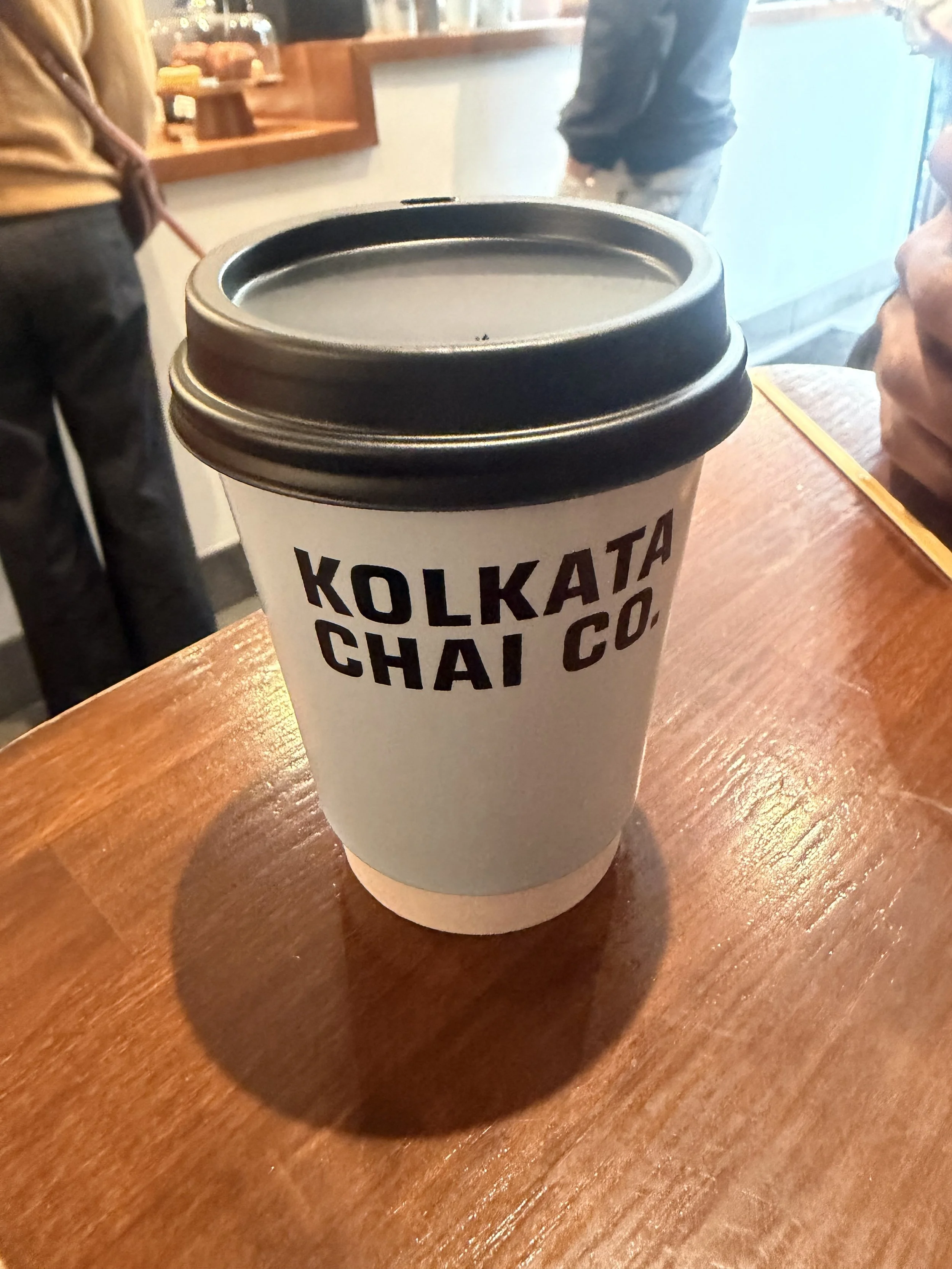
Growing up in a tea family, I don’t drink coffee. I’m not even a big caffeine person but I do love cup of chai! So I was really excited when I finally had an opportunity to check out Kolkata Chai Co. in the East Village this weekend on my way to the reopened New Museum.
I went in expecting a good cup of chai and left thinking about medicine. Not the typical Western medicine with a prescription but the kind of medicine that’s been hiding in plain sight for thousands of years, simmering in a pot of spiced milk and tea. I ordered a classic masala chai: Assam black tea, whole milk, cardamom, cinnamon, black pepper, and cloves. A perfect cup that warms you from the inside out before the caffeine even hits on a cool morning.
Kolkata Chai Co. was started by two brothers, Ayan and Ani Sanyal, first-generation immigrants who wanted to bring the chai they grew up drinking in Kolkata to New York. What you will find is a small, warm space in the East Village that smells like cardamom and feels like someone’s kitchen. I loved watching the chaiwalas behind the counter making chai in large metal teapots and watching the process of the bubble and release an intoxicating and sophisticated aroma of spices. I felt like Pepe Le Pew, following my nose right to my cup.
Thich Nhat Hanh wrote that when you drink tea, you should drink only tea, not your worries, not your plans, not your phone. Sitting at Kolkata Chai Co. with that first sip of masala chai, I understood the assignment. In the Plum Village tradition, tea drinking is a meditation practice in itself. You hold the cup and use the moment to feel the warmth, notice the steam, and arrive fully in your body. It strikes me that Ayurveda is asking you to do something similar: pay attention to what you’re consuming and how it moves through you.
I won’t claim to be a chai or Ayurveda expert but I’ve been trying to study more as Ayurveda is seen as the sister science to yoga! In my research, I learned that not only does chai predates coffee culture by a few thousand years but black tea was not originally a part of the chai recipe annd wasn’t added until around the 1930s. The original recipes in India were created as Ayurvedic healing drinks and the chai spices are a carefully balanced combination of ingredients that Ayurveda uses to support digestion, circulation, and energy.
Ginger is the star of Ayurvedic digestion. It stokes what’s called agni, your digestive fire, by stimulating enzyme production and helping food move through your system. It’s also anti-inflammatory and is traditionally used to clear ama, the Ayurvedic term for accumulated toxins in the body. TCM also classifies ginger as warmth building, specifying dried ginger as hot (strong yang) and fresh ginger as warm. Both systems use ginger primarily to support digestion, with the difference being that TCM says ginger expels cold and strengthens the spleen vs stoking agni and clearing ama. Same idea though!
Green cardamom is one of the rare spices that’s considered tridoshic, meaning it balances all three doshas (Vata, Pitta, and Kapha). It’s cooling enough to offset some of the heat from the other spices and supports both digestion and respiratory health. In TCM, things diverge because TCM classifies cardamom as warm (yang). Both systems recognize cardamom as gentler than the others, but Ayurveda emphasizes its cooling quality more than TCM does.
Black pepper is heating and stimulating, which makes it great for Vata and Kapha types who tend toward sluggish digestion. In Ayurveda, it’s also known as a yogavahi, a catalyst that enhances the bioavailability of other herbs and spices. In other words, it makes everything else in your chai work better. TCM also classifies black better as hot, strong yang. TCM has a similar concept to yogavahi and sees pungent spices as ways to “move qi” and help the body distribute the properties of other ingredients.
Cinnamon is warming and sweet, which helps ground Vata energy. It supports healthy blood sugar and circulation. If you tend to feel cold or scattered, cinnamon is your friend.
Cloves are intensely warming and are used in Ayurveda for everything from toothaches to respiratory congestion. They add that deep, musky note to chai that rounds out the brighter spices. TCM also places cloves in the warm (yang) category. Both systems use cloves for digestive and respiratory support.
Thich Nhat Hanh taught that a cup of tea is an intersection of everything: the rain, the soil, the hands that picked the leaves, your own breath as you drink it. When you start to see chai through an Ayurvedic or TCM lens, you realize these traditions have been saying the same thing that nothing you consume is separate from you.
Highly suggest checking out Kolkata Chai Co. at one of their two locations or The Chai Spot, which has a great hang out space in the back. Or consider trying to make one at home! Regardless of whatever it is you’re consuming, consider trying this Plum Village gatha for drinking tea: “This cup of tea in my two hands, mindfulness held perfectly.” You don’t need to know your dosha or your TCM constitution to benefit from chai. Sometimes the most healing thing is just being fully present for it.